
Khang A. Vo of Syosset (seye’-AH’-seht) was arrested by the SPCA for attempting to sell an Alligator to undercover detectives. It all started when he put an add on Craigslist which was answered by authorities. He is expected in court on April third to answer charges for “Possessing a Dangerouse Animal ” He posted $250 bail <—-what a joke. The Alligator is going to be sent to an out of state sanctuary.
Author Archives: Jason W
VIDEO: Turtles lead the extinction race
Partners in Amphibian and Reptile Conservation (PARC) which DRN is a member of, is calling for more education for turtle Conservation. This week the Turtle Conservation Coalition said in their Top 25+ Turtles in Trouble report that turtles are the fastest disappearing species in the world. According to their report 48%-54% of all turtles and tortoises are threatened. 2011 has been designated as the year of the turtle. Those wishing to learn more can do so on the PARC Website
A change in plans
So I have had some time to do some thinking today and I think I need to spend a wee bit more time off line than I normally do. I decided to change what I do on a daily basis to give more time to build business and get stuff done. I am still of course going to keep up the show schedule so no worries there but I think I will pick one time per day, probably in the afternoon to answer emails, comments, FB exc exc. That should free up an unbelievable amount of time. If anyone needs to get a hold of me for an important reason most people know how to do that. It is my goal that doing this will help make DRN better faster but unfortunately at the risk of not being as “available” as most everyone is so use to me being. Every comment, question, post exc exc will still be answered just not as fast as normal. I think I will start doing this today and see how it works over the weekend.
DRN’s YouTube show breaks 900 subscribers.

I am super happy to announce that today the YouTube channel got over 900 subscribers. Its really neat that things are starting to happen and the accomplishment is getting closer and closer each day. I think I will start writing more blogs like I use to keeping everyone up to day on stuff like this as well as some inside deals with DRN, I am sure at least one person is interested in it. One thing is for sure and that is I am definitely going to be taking some time off soon, maybe even tomorrow. Of course I will always keep the news coming but I get up at 4:30 each morning and go go go until late into the night, sometimes midnight or later and the office is absolutely thrashed right now. The studio to is a big mess so I think I will get them both cleaned so I can work more productively. The good part is things are moving forward and I have yet to start hating my job so life is awesome. Snakes should start breeding very soon as well so I am super excited about that. I have pared them up already but saw very little interest. I don’t expect to really see any for may another 2 weeks at least.
Reptile stops construction.
hibernating western painted turtle has brought a project to a standstill. In B.C. it is a blue list species and is also on the federal at risk list. The find caught environmental consultants off guard as the spot is not a known sustainable habitat for the species. The project was scheduled to be done by the end of Mark but because the at risk turtle was found it has not bee stopped until the turtles come out of hibernation and the project is not slated to be finished in June. The contractor stated there is a little bit of work they can do that wont effect the turtle but for the most part the work will have to wait.
One of the coolest lizards in the world
So I was thinking about this section this morning and also thinking about the upcoming herping season. I remember the opportunities I had to photograph Zebra Tailed Lizards in Nevada. I think they are some of the coolest lizards in the world but a pain in the butt to catch. The pictures below are NOT mine, I will try to find mine, until then enjoy.
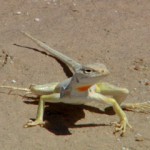
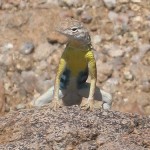
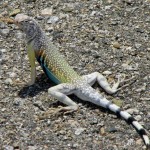
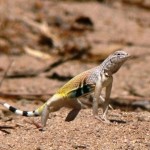
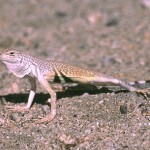
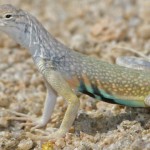
Zebra-tailed lizards live in open desert with fairly hard-packed soil, scattered vegetation and scattered rocks, typically desert flats, washes and plains. They range from 2.5 to 4 inches (63 to 100 mm) in length. These lizards are grey to sandy brown, usually with series of paired dark gray spots down the back, becoming black bands on the tail. The underside of tail is white with black bands. Males have a pair of black blotches on the side, extending to blue patches on the belly. Females have no blue patches, and the black bars are either faint or completely absent.
They are diurnal and alert. They rise early and are active in all but the hottest weather. During the hottest times of day, lizards may stand alternately on two legs, switching to the opposite two as needed in a kind of dance. When threatened they will run swiftly with their toes curled up and tails raised over their backs exposing the stripes. They can even run on their hind legs for short distances. In areas of creosote scrub this lizard seems to reach highest densities, around 4.8 to 6.0 individuals per acre (600 to 800 m² per lizard). This lizard burrows into fine sand for retreat at night and usually seeks day shelter in the shade of bushes.
In summer, 2 to 8 eggs are typically laid, hatching anywhere from July to November. However, more than 1 clutch can be laid during a season. Eggs are laid, presumably, in friable, sandy soil. Being a prey species for many animals, including birds, other lizards, and mammals, they have a fairly high reproductive potential.
It feeds on a variety of prey from insects, such as moths, ants and bees, as well as spiders and other smaller lizards. Its diet occasionally includes vegetation, such as spring buds and flowers.
The zebra-tailed lizard is common and widely distributed throughout the southwestern United States, ranging from the Mojave and Colorado deserts north into the southern Great Basin.
Child found petting Alligator in living room.
Not only did a Brazilian woman find a 5 foot Alligator behind her sofa but also found her 3 year old son petting it after heavy rains flooded their house. Fire officials were called to remove the Alligator. Firefighter Captain Luiz Claudio Farias said “it could have seriously hurt or even killed the boy.”
Capt Farias said it was “not uncommon for animals such as alligators and snakes to enter people’s houses in towns such as Parauapebas” which are built very near rivers and the rainforest.
The Alligator was taken to a less popular area and released into the wild.